
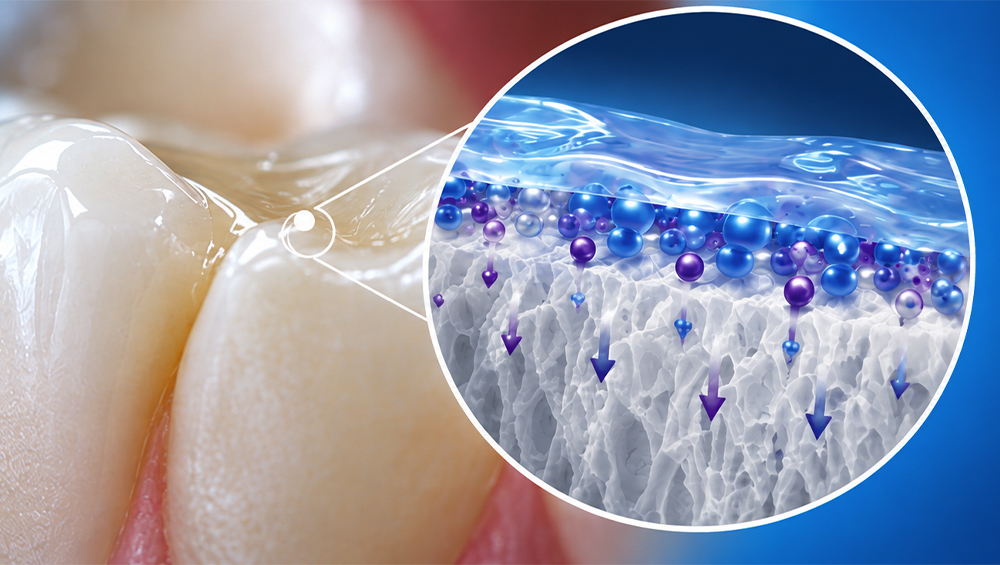
A fast fluoride release may sound impressive. But when the goal is lasting protection of enamel, the more important question is whether fluoride remains on the tooth surface long enough to become incorporated into it.
Patient experience matters. A fluoride treatment that looks clear, feels smooth and requires fewer post-treatment restrictions may be appealing to patients and clinicians alike. Those benefits have helped generate interest in water-based products such as Solventum’s Clinpro™ Clear Fluoride Treatment, which is promoted as providing effective fluoride uptake with a minimum contact time of 15 minutes.
But speed and comfort are not the only considerations when choosing a professional fluoride treatment. The purpose of fluoride varnish is not simply to release fluoride quickly. It is to keep fluoride available at the enamel surface long enough to support meaningful, lasting protection.
That is where adhesion becomes important.
Fluoride release is only the beginning
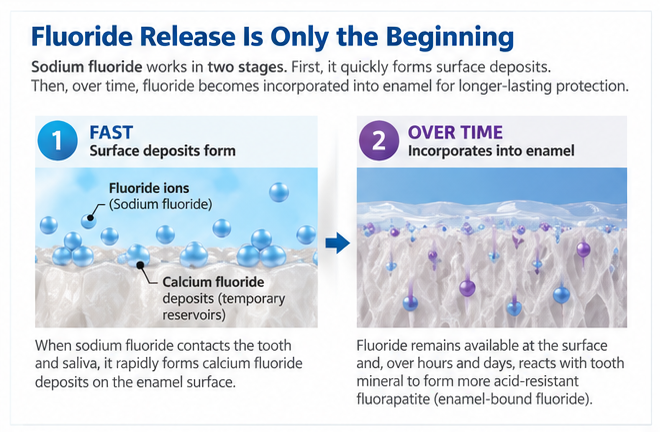
When sodium fluoride comes into contact with the tooth and saliva, it can rapidly form calcium fluoride deposits on the enamel surface. These deposits act as temporary fluoride reservoirs. Under acidic conditions, they can release fluoride back into the oral environment and help protect the tooth.
However, fluoride deposited on the surface is not the same as fluoride incorporated into enamel. For longer-lasting protection, fluoride must react with tooth mineral to form more acid-resistant fluoridated apatite, often described clinically as fluorapatite or enamel-bound fluoride. That conversion is slower. It occurs over hours and days, not merely during the first few minutes after application.
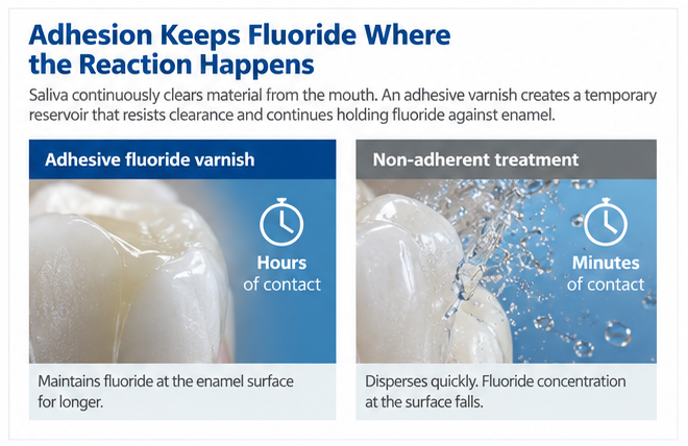
Adhesion keeps fluoride where the reaction happens
In What We Know About Fluoride-Releasing Varnish, published in the May 2026 issue of Dentaltown, Clifton Carey, PhD, explains that the formation of enamel-bound fluoride is a slow process. Fluoride ions must remain near the enamel surface while the slower incorporation reaction proceeds.
Saliva is continuously clearing material from the mouth. A water-based treatment can make fluoride available quickly, but once the treatment disperses, the concentration of fluoride at the tooth surface falls. An adhesive varnish creates a temporary reservoir that resists that clearance and continues holding fluoride against enamel.
That contact time is not an inconvenience added to the treatment. It is part of how the treatment works.
Dr. Carey’s published comparison measured enamel-bound fluoride after three hours of exposure to four professional fluoride formulations. In that study, FluoroDose, an adhesive 5% sodium fluoride varnish, produced the highest enamel-bound fluoride level. Its result was approximately 3 times that of the non-adherent Clinpro Clear treatment under the reported test conditions.
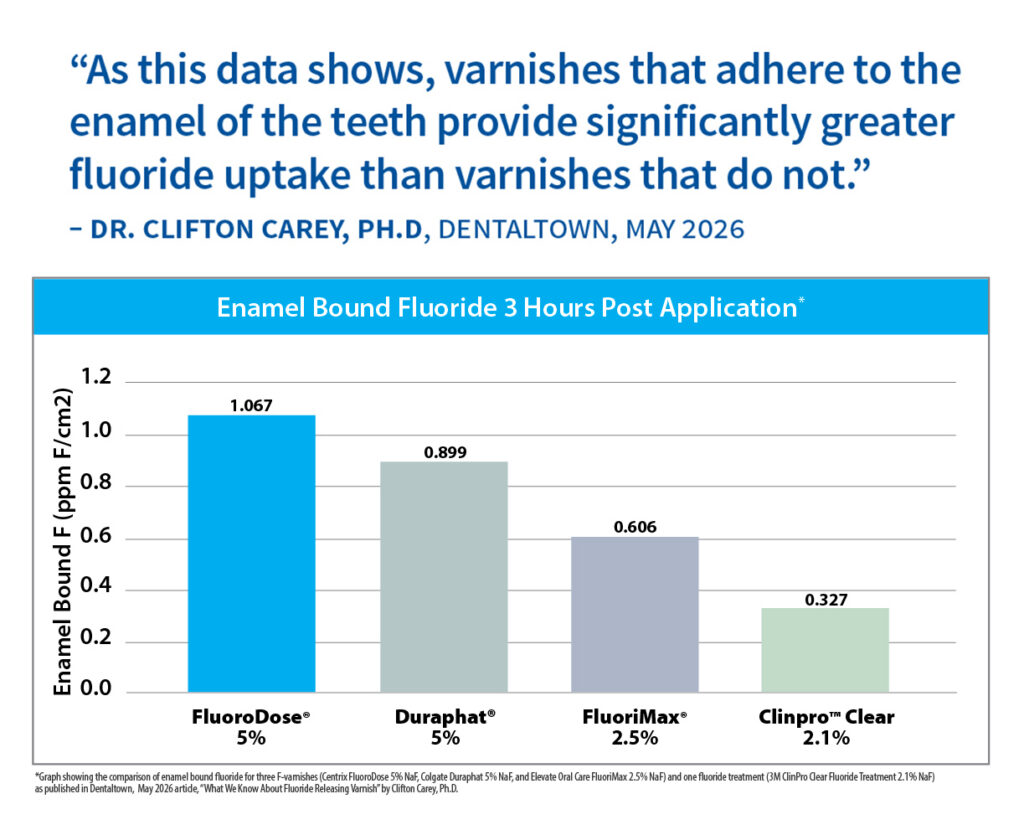
This does not mean that a water-based treatment releases no fluoride or has no activity. It means that rapid availability should not automatically be interpreted as superior long-term incorporation into sound enamel. If the clinical goal is prevention, the ability to maintain fluoride at the surface while enamel-bound fluoride forms is a meaningful performance characteristic.
Sound enamel deserves special attention
Professional fluoride varnish is frequently used preventively. That makes performance on sound enamel especially relevant.
Demineralized enamel can react with fluoride more readily because mineral loss has created a more porous surface. Sound enamel presents a greater challenge. Its fluoride uptake is slower, making sustained exposure more important. A product that adheres for hours gives intact enamel more time to interact with fluoride than a treatment designed around a short contact period.
When evaluating a fluoride product for routine prevention, clinicians should therefore ask:
- Was the research performed on sound enamel or demineralized enamel?
- Was the measured endpoint soluble fluoride, surface-deposited fluoride or enamel-bound fluoride?
- How long did the product remain in contact with the tooth?
- Were products tested with equivalent methods and clinically relevant exposure times?
- Does the formula remain on enamel long enough to support the slower incorporation process?
Patient experience and preventive performance should work together
A comfortable treatment experience can improve acceptance, particularly among patients who dislike the feel of traditional varnish. That is a legitimate consideration. But a professional fluoride product should be selected first for its ability to support the intended clinical outcome.
FluoroDose is designed to balance those needs. Its 5% sodium fluoride formula adheres to enamel for approximately four to six hours, maintaining prolonged contact while enamel-bound fluoride develops. It is applied in a thin layer, goes on clear and is available in patient-friendly flavors.
The key distinction is simple: FluoroDose does not merely make fluoride available. It helps keep fluoride where it is needed while the tooth has time to incorporate it.
The bottom line
“Fast fluoride uptake” is an appealing message, but speed alone is not the full measure of a fluoride treatment. A 15-minute treatment can demonstrate early fluoride deposition; it does not support the slower formation of durable, enamel-bound fluoride.
For prevention on sound enamel, contact time matters. Adhesion extends that contact time, resists salivary clearance and supports the chemistry that turns available fluoride into longer-lasting protection.
Before switching from an adhesive varnish to a water-based treatment, look beyond how quickly fluoride is released. Ask what kind of fluoride was measured, where it was measured and whether the product remains on the tooth long enough for enamel to use it.
Because when the clinical objective is lasting protection, staying power is not a drawback. It is the point.
References
- Carey C. What We Know About Fluoride-Releasing Varnish. Dentaltown. May 2026.
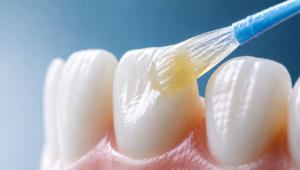
Fluoride Varnish Treatments – Don’t Fall for Marketing without Checking the Science First
Patient comfort is important but should not be prioritized over clinical efficacy. Learn what to look for in a fluoride varnish to balance both.
Manage Sensitivity with Confidence with Solutions from Centrix
Centrix offers three targeted desensitizing solutions – Glu/Sense, D/Sense Crystal, and SilverSense SDF – to help clinicians choose the right product for each sensitivity indication.
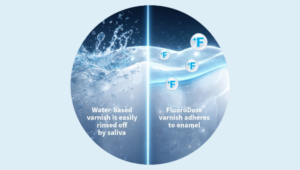
Science Matters When it Comes to Fluoride Varnish
New science is helping clinicians better understand why varnish retention and contact time matter for long-term fluoride protection.