
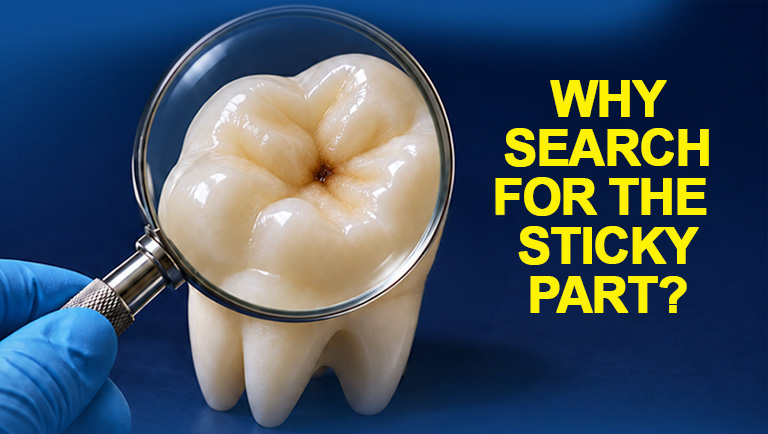
For decades, a “sticky” explorer was considered a telltale sign of tooth decay. But pressing a sharp instrument into a suspicious lesion can do more than detect a problem; it can potentially create one. While this approach has been the standard for many years, it’s time to embrace a safer way; especially with modern tools at our fingertips.
The problem with poking the lesion
Many clinicians were taught to press a sharp explorer into suspected areas and interpret a catch or tug as evidence of caries. Yet a sticky sensation is not a reliable stand-alone diagnosis. Anatomy, plaque, and surface characteristics can complicate the finding, while early demineralization may be present without a detectable catch.
More importantly, applying force to a noncavitated lesion risks damaging its relatively intact surface layer. In a 2022 Today’s RDH article, Abigail Alewelt, RDH, describes the shift away from aggressive probing and toward visual examination, radiographs, and gentle assessment.1 The American Dental Association likewise cautions that forceful probing may cause iatrogenic enamel damage.2
The concern is supported by research. In a study of extracted primary teeth, gentle ball-ended probes produced significantly less severe surface damage than sharp explorers. This is clear evidence against using force and “stickiness” as the deciding test.3
Looking beyond the drill
A noncavitated lesion can sometimes be managed without drilling through remineralization and other risk-based preventive measures. Preserving the surface matters. Once a lesion is cavitated, the clinical considerations change but even then, a diagnosis should integrate lesion appearance and activity, patient risk, radiographic findings, and clinical judgment.
Contemporary dentistry needs to move beyond the “watch and wait” and “drill and fill” mindsets. Rather than waiting for a lesion to progress to the point where restorative intervention becomes necessary, clinicians have an opportunity to identify early signs of demineralization and take proactive steps to manage the disease.
By prioritizing early detection, minimally invasive techniques, and targeted preventive care, dental professionals can help preserve more natural tooth structure and improve long-term patient outcomes. After all, the best dentistry isn’t always about what we restore, but what we can prevent from needing restoration in the first place.
“Exposé” the caries without poking
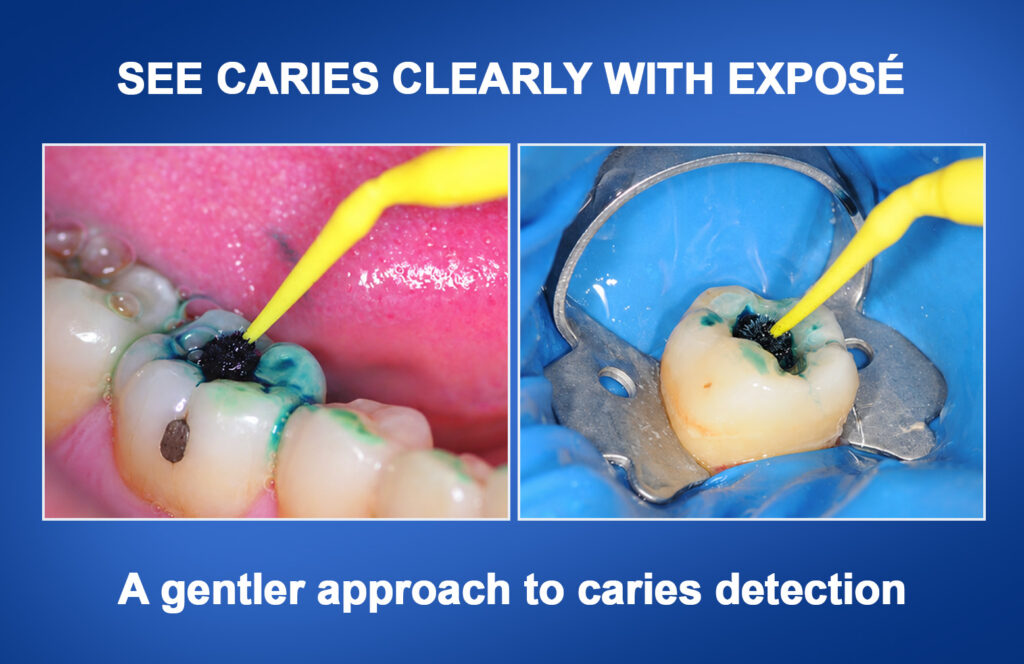
Exposé, disposable caries indicator, contains a blue dye in a propylene glycol base, pre-dried onto a single-use Benda Micro applicator. Unlike probing for a “stick”, Exposé does not require forceful penetration of a lesion; instead, it works by staining the by-products of carious lesions a distinct blue hue. Exposé can help verify whether a suspected area requires restorative treatment in the first place and then guide a more deliberate, minimally invasive preparation. The blue color can be especially useful when discolored dentin is difficult to distinguish from healthy tooth structure, or when working in deep preparations where visibility is challenging.
The bottom line
The future of caries management isn’t about seeing what “sticks”; it’s about detecting trouble spots early enough to make a difference. With tools like Exposé caries indicator, clinicians can move beyond the traditional “stick test” toward a more informed, minimally invasive approach to caries detection and management. By identifying lesions early and avoiding unnecessary damage to tooth structure, dental professionals can open the door to more preventive treatment options and help patients keep their natural teeth healthier, longer.
Have questions or want to learn more about how Centrix can make prevention easier for you and your patients? Call us at 800.235.5862 or contact your Centrix Account Manager.
References
1. Alewelt A. Why Caries Detection is More than Just Looking for “Stickiness.” Today’s RDH. March 19, 2022. https://www.todaysrdh.com/why-caries-detection-is-more-than-just-looking-for-stickiness/
2. American Dental Association. Caries Risk Assessment and Management. https://www.ada.org/resources/ada-library/oral-health-topics/caries-risk-assessment-and-management
3. Do the ball-ended probe cause less damage than sharp explorers? An ultrastructural analysis. BMC Oral Health. 2016. https://pmc.ncbi.nlm.nih.gov/articles/PMC4802724/
Why Adhesion Matters: Fluoride Varnish Needs Time to Do More Than Release Fluoride
Switching to a water-based fluoride treatment? There may be a downside – learn the science to understand how this choice affects your patients.
Fluoride Varnish Treatments – Don’t Fall for Marketing without Checking the Science First
Patient comfort is important but should not be prioritized over clinical efficacy. Learn what to look for in a fluoride varnish to balance both.
Manage Sensitivity with Confidence with Solutions from Centrix
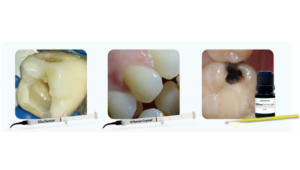
Centrix offers three targeted desensitizing solutions – Glu/Sense, D/Sense Crystal, and SilverSense SDF – to help clinicians choose the right product for each sensitivity indication.