
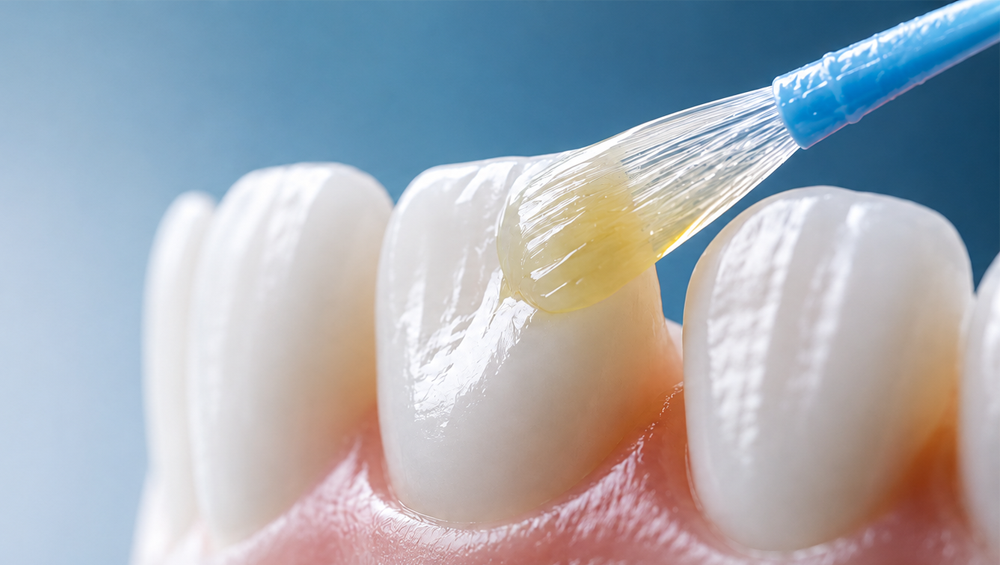
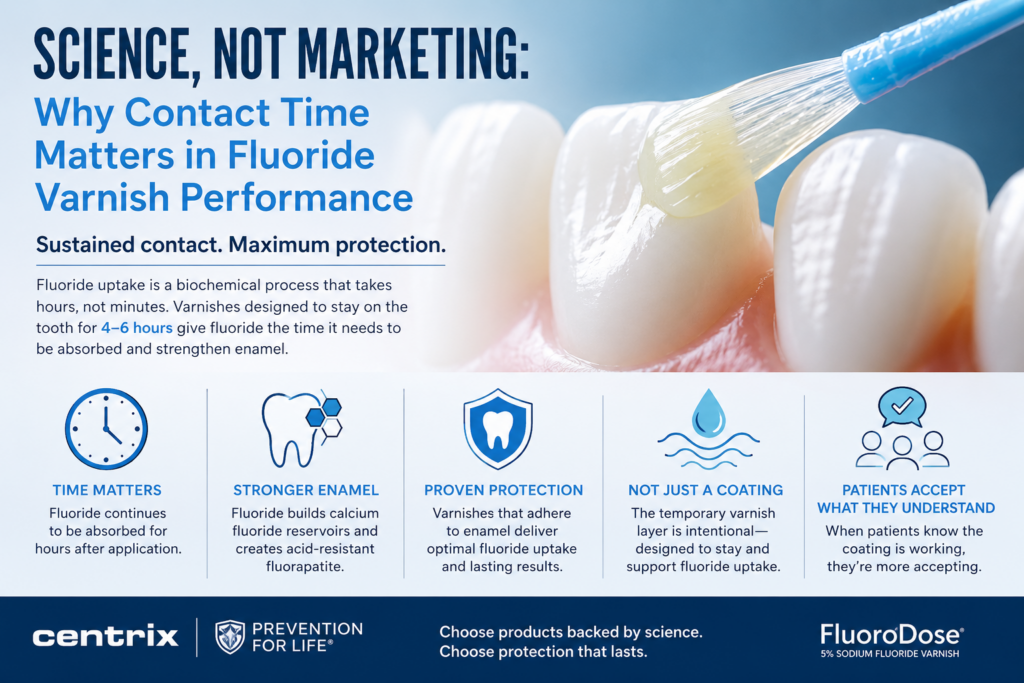
New fluoride varnish treatment technologies continue to improve the patient experience, with some products emphasizing a lighter feel and little-to-no residual coating. While patient comfort is important, clinicians should also ask an equally important question: does improving comfort change how fluoride performs? The science behind fluoride varnish is clear – contact time matters. If a fluoride treatment does not remain on the tooth surface long enough, it may not provide the same opportunity for fluoride uptake as traditional varnishes formulated to adhere to enamel for several hours.
Fluoride Uptake Is Not Instant
Fluoride uptake is not magic, it’s a biochemical process. After a varnish is applied, fluoride gradually diffuses and forms calcium fluoride reservoirs, which ultimately contribute to the formation of more acid-resistant fluorapatite. This process occurs over hours and days, not minutes. Simply placing a fluoride solution on the teeth briefly does not maximize the amount incorporated into the enamel.
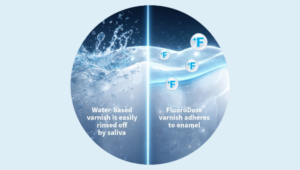
Traditional fluoride varnishes are formulated with adhesive carriers that help them remain on the tooth surface long enough for this natural process to occur. Their ability to adhere to enamel is an intentional design feature that supports sustained fluoride uptake, not a formulation flaw. Marketing messages that portray the residual coating as something to eliminate overlook the reason varnishes were designed this way in the first place. Think about it – if this coating didn’t matter, why wouldn’t you just have your patients swish their mouth with a fluoride rinse?
What the Science Shows
A recent Dentaltown article ‘What We Know About Fluoride-Releasing Varnish’ by a Clifton Carey, Ph.D., a scientist specializing in fluoride chemistry, reviews the current understanding of fluoride varnish performance and explains that sustained contact with enamel is essential for optimal fluoride uptake. The article discusses how fluoride continues to be incorporated into enamel long after application and why formulations that remain in place support this process more effectively than products that are rapidly washed away by saliva or oral function.
Dr. Carey explains further why the efficacy of water-based fluoride treatments should be questioned:
“Recently, a new fluoride treatment product has been introduced that is water-based and does not produce a sticky coating. It is proposed that it provides fluoride along with calcium and phosphate without the delay needed for hydration, presumably to react with the tooth mineral sooner. As with other F-varnishes, most of the calcium and fluoride precipitates as loosely bound fluoride. The slow reaction for fluoride ions to react with the enamel is not accelerated, and without a varnish layer to hold the fluoride on the tooth surface, the released ions will quickly be washed away by the saliva before any significant enamel-bound fluoride is made. At this time, the formation of additional enamel-bound fluoride to healthy enamel because of the presence of calcium salts included within the F-varnish has not been demonstrated.”
Patients Accept What They Understand
Patients are willing to tolerate the temporary feeling of fluoride varnish when they understand its purpose. Explaining that the thin coating is intentionally designed to remain on the teeth for several hours—and that this extended contact helps maximize efficacy —can improve acceptance and reinforce the value of treatment. In many cases, if patients can still feel the varnish, they recognize that the protective treatment is still working.
It is important to improve the patient experience, however, maximizing comfort should never come at the expense of clinical efficacy. A fluoride treatment that feels more comfortable but significantly reduces contact time may compromise the very mechanism that makes fluoride varnish effective. The ideal solution is one that balances patient acceptance with prolonged enamel contact.
The Bottom Line
As new fluoride technologies enter the market, clinicians should evaluate them based on evidence rather than marketing claims alone. The first question should never be which varnish feels best for my patents; it should be does it provide enough contact time to support optimal fluoride uptake? Products such as FluoroDose are formulated to remain on the teeth for an extended period, aligning with the underlying science of enamel biochemistry and fluoride delivery while continuing to provide patients with proven protection.
If you have any questions about the science behind fluoride varnish or would like to purchase a varnish that maximizes both clinical efficacy and patient comfort, our dedicated team will be happy to help. Call us at 800.235.5862 or contact your Centrix Account Manager.
Why Adhesion Matters: Fluoride Varnish Needs Time to Do More Than Release Fluoride
Switching to a water-based fluoride treatment? There may be a downside – learn the science to understand how this choice affects your patients.
Manage Sensitivity with Confidence with Solutions from Centrix
Centrix offers three targeted desensitizing solutions – Glu/Sense, D/Sense Crystal, and SilverSense SDF – to help clinicians choose the right product for each sensitivity indication.
Science Matters When it Comes to Fluoride Varnish
New science is helping clinicians better understand why varnish retention and contact time matter for long-term fluoride protection.